If you’re wondering whether you need to do anything special to your artificial turf this winter, don’t worry. In fact, fall and winter are the easiest seasons for artificial turf maintenance in DFW. While your neighbors are raking, aerating, and overseeding their natural grass, you’ll spend maybe 30 minutes total on lawn care between October and March.
Why Cooler Weather Makes Artificial Turf Maintenance in DFW Easy
While natural grass goes dormant and turns brown, your artificial turf stays green and ready to use. Even better: cooler weather is actually easier on your lawn than summer.
- Less UV damage – October through February means shorter days and lower sun angles, giving your turf fibers a break from intense sunlight.
- Less wear and tear – Cooler weather means less foot traffic (no pool parties in January), so the turf ages more slowly.
- No heat stress – Those 150°F surface temps from August are long gone, which reduces expansion and stress on seams and infill.
Only two real challenges: Falling leaves and the occasional frost. Handle those, and you’re set.
October-November: The 30-Minute Fall Prep
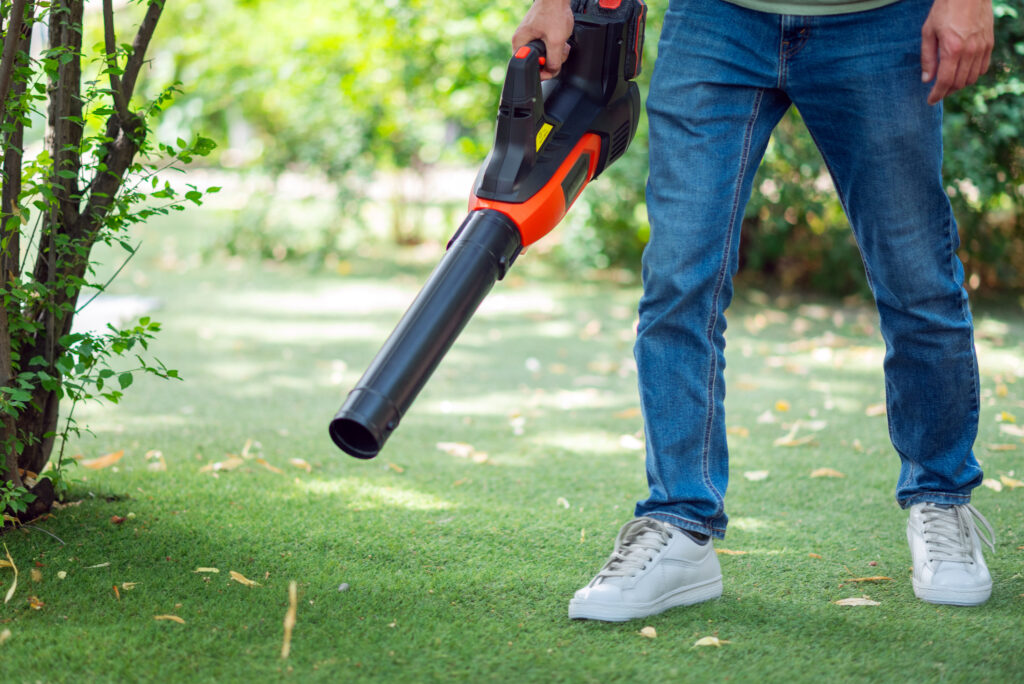
Clearing autumn leaves from artificial turf in Dallas—simple, quick maintenance that keeps your lawn looking fresh all season.
Autumn in DFW means one thing: leaves. Lots of them. Even if your yard doesn’t have trees, your neighbor’s oak trees will make sure you get some. Here’s your fall to-do list:
- Clear Leaves Weekly – Use a leaf blower on low setting or a soft-bristled broom. Don’t let leaves pile up for weeks—wet leaves trap moisture against the turf, which can cause odor and block drainage holes. Time required: 10 minutes per week
- Check Your Seams and Edges – Walk your entire lawn and look for edges lifting, seams separating, or loose infill along borders. Easier to fix now than after winter storms. Time required: 5 minutes
- Brush High-Traffic Areas – If the turf looks flattened near gates or walkways, use a stiff broom to lift fibers back up and redistribute infill. Time required: 5 minutes
- Test Your Drainage – Run a hose for a few minutes; water should disappear almost instantly (check drainage tips here). If you see pooling, clear debris before DFW’s November-December storms. Time required: 5 minutes
Pro tip: If you have a pet area, rinse it thoroughly before winter. You don’t want organic matter sitting on your turf during the wetter months.
By December, most of your prep work is done. As a result, winter becomes the easiest stretch of artificial turf maintenance in DFW.
December-February: Why Winter is Your Easiest Season
Congratulations. You’ve reached the easiest stretch of artificial turf maintenance in DFW. Your entire winter routine:
- Brush high-use areas with a broom (5 minutes)
- Rinse off dust and pollen after dry spells (5 minutes)
- Clear any leaves or debris after storms (10 minutes)
That’s it. No mowing. No watering. No fertilizing. No reseeding bare patches.
What About Frost?
On those rare mornings when Dallas hits 25°F and your turf has a layer of frost, just leave it alone. The fibers will feel stiff (like a cold yoga mat), but they’ll warm up and return to normal once the sun comes out.
- Don’t: walk heavily, scrape frost, or pour hot water.
- Do: let it thaw naturally and keep pets off until it warms up.
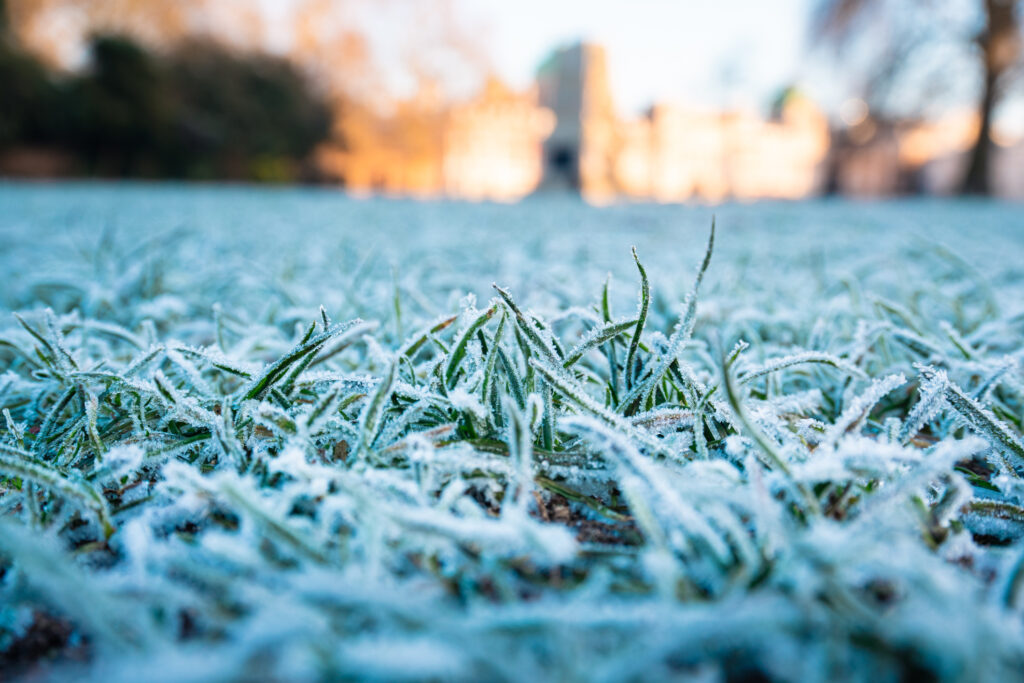
Light frost on artificial turf in Dallas—it thaws naturally by mid-morning without any damage to fibers.
However, there are still a few common winter myths about artificial turf that need clearing up.
Common Winter Myths—Debunked
- “Will my turf freeze solid and crack?” – Nope. Modern PE turf handles -20°F to 150°F. Your lawn survived August—it can handle January.
- “Do I need to cover my turf in winter?” – Absolutely not. Covering traps moisture and causes more problems than it prevents.
- “What about snow?” – Let it melt naturally. Turf drains faster than concrete, so your lawn dries first.
- “Does frost damage the backing or infill?” – Not at all. Pinnacle’s urethane backing and infill are made for DFW’s freeze-thaw cycles.
March Refresh: Getting Ready for Spring
- Deep rinse or power wash – Flush dust and pollen (10–15 minutes).
- Check infill levels – Add or redistribute where needed.
- Inspect pet areas – Rinse with enzyme cleaner to remove odors.
- Brush everything – Lift fibers and redistribute infill (30–45 minutes total).
This quick tune-up ensures your lawn is ready for spring barbecues, kids playing outside, and whatever else North Texas weather throws at it.
When to Call in the Pros
Most homeowners can handle seasonal maintenance themselves. But if you want your turf to look professionally maintained—or if you just don’t want to deal with it—Pinnacle Turf Solutions offers annual maintenance services designed specifically for North Texas conditions.
- Deep infill reconditioning
- Seam inspection and repair
- Drainage system check
- Full power wash and sanitation
- Fiber brushing and grooming
At Pinnacle Turf Solutions, we install turf built for DFW weather—and we’re here to help you maintain it season after season.
Keep Your Lawn Looking Perfect Year-Round
Ultimately, fall and winter maintenance for artificial turf in Dallas-Fort Worth is simple: clear leaves, brush occasionally, let frost melt naturally, and do a quick spring refresh. Your turf is designed to handle North Texas weather with minimal care. Follow these simple seasonal practices, and your lawn will stay green, clean, and ready to use—no matter what the thermometer says.
📞 Need maintenance help or have questions? Get a free consultation and we’ll walk you through exactly what your lawn needs this season.
Serving: Dallas-Fort Worth