(Estimated reading time: 4 minutes)
Why Drainage Matters for DFW Turf
Natural grass can turn into a mud pit after one of those quick Frisco downpours. Artificial turf drainage in DFW works through a designed system that keeps the surface usable minutes after rain ends.
Most high-quality turf includes a perforated backing that lets water flow straight through. Underneath that sits a graded base layer (typically crushed stone) that channels water away from the surface.
In simple terms: Rain hits. It flows down. It disappears. No puddles. No muddy shoes.
How Artificial Turf Handles Heavy Rain in DFW
Here in the DFW area, drainage rates are measured in inches per hour. A well-installed system can move over 20 inches of rain per hour off the surface, according to ASTM F1551 standards for water permeability. That’s more than enough for the wildest North Texas storm.
If your yard ever puddles, it’s rarely the turf’s fault. It’s usually a base grading issue or an improper sub-drain layout. Both are fixable, but they require the right crew and equipment.
5-minute homeowner check: After a storm, walk your yard. If you see standing water that lasts more than 10 minutes, take a photo. That helps your installer pinpoint low spots or clogged drains later.
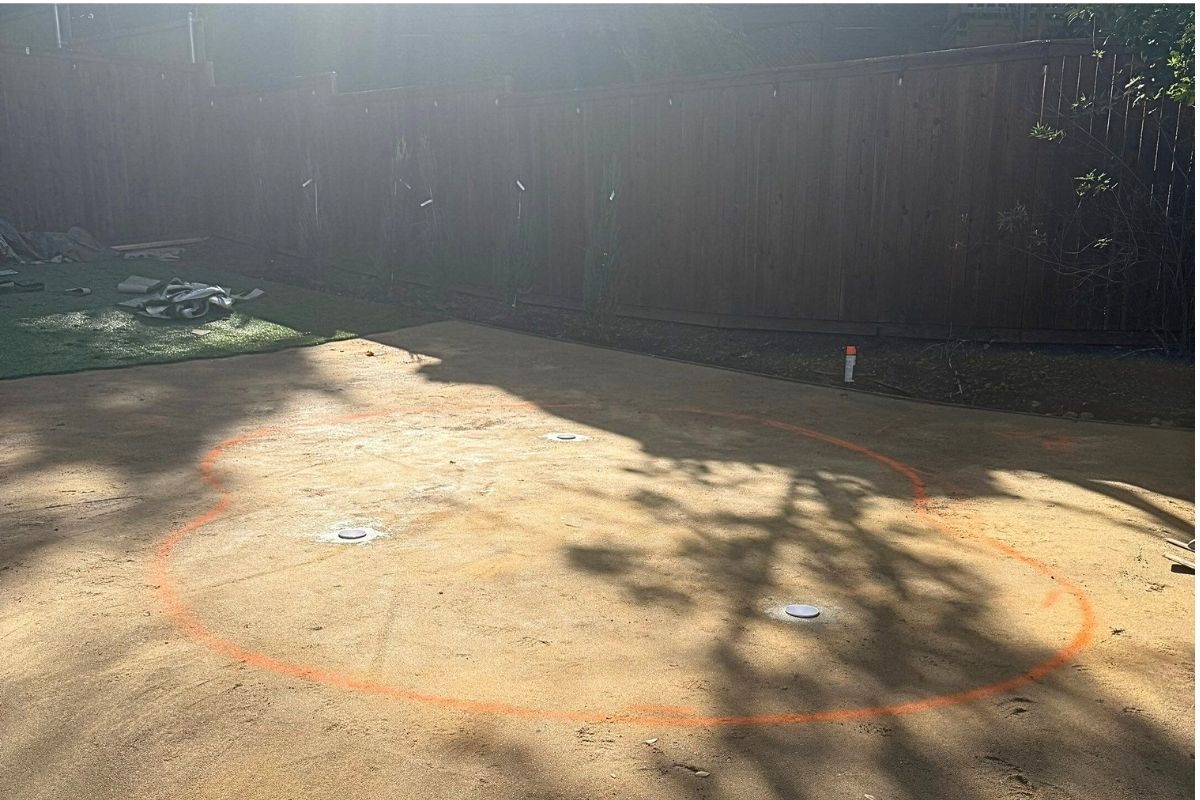
Proper sub-base grading and drainage prep ensure turf drains at over 20 inches per hour in North Texas conditions.
Common Drainage Myths in North Texas
- Myth: “Artificial turf causes flooding.”
Truth: Properly installed turf drains faster than most natural lawns because the base is engineered for water flow. - Myth: “You can install turf directly on top of soil.”
Truth: That shortcut is what causes problems later. Without a graded base, water collects under the turf and creates soft or uneven spots. - Myth: “Drainage only matters on sloped yards.”
Truth: Even flat lots in Plano or McKinney need engineered flow paths. Texas clay soil doesn’t absorb water quickly, so every yard needs an escape route for heavy rain. According to the Texas A&M AgriLife Extension (https://agrilifeextension.tamu.edu/library/landscaping/understanding-soil-and-how-it-affects-your-lawn/), North Texas soils have limited permeability, which makes proper base grading and sub-drain design essential for long-term turf performance.
Local Proof: When DFW Skies Open Up
When Dallas gets one of those 3-inch-per-hour storms, well-built turf systems keep driveways clear and yards usable. It’s all about proper layers: crushed granite base, perforated backing, and efficient edge drainage.
That’s why our team at Pinnacle Turf Solutions designs every yard to handle extreme weather, from Plano backyards to Fort Worth putting greens.
Tip: Ask your installer for the system’s ASTM drainage rate. Anything under 10 inches per hour is below DFW standards.
Ready to make yard puddles a thing of the past? Reach out to Pinnacle Turf Solutions. We’ll show you how smart drainage keeps North Texas lawns looking great year-round.
Proudly Serving the Dallas-Fort Worth Metroplex